India’s Cybersecurity Moment: Skills the Market Needs

India is undergoing one of the fastest digital transformations in history. Over 15 billion UPI transactions happen every month. The digital economy is projected to hit $1 trillion by 2027. Healthcare, banking, government: every sector is moving online at a rapid pace.
The infrastructure is growing. The skilled workforce to protect just is not keeping up.
India currently faces a shortage of over 1 million cybersecurity professionals, and that gap is widening every year. According to the 2025 Fortinet Global Cybersecurity Skills Gap Report, 92% of Indian organisations experienced at least one cyber breach in 2024, with 34% reporting five or more incidents. The primary cause cited? Insufficient IT security training and expertise.
For anyone technically inclined and considering where to build a career, that shortage represents one of the largest windows of opportunity in the Indian tech market right now.
Lets discuss the numbers
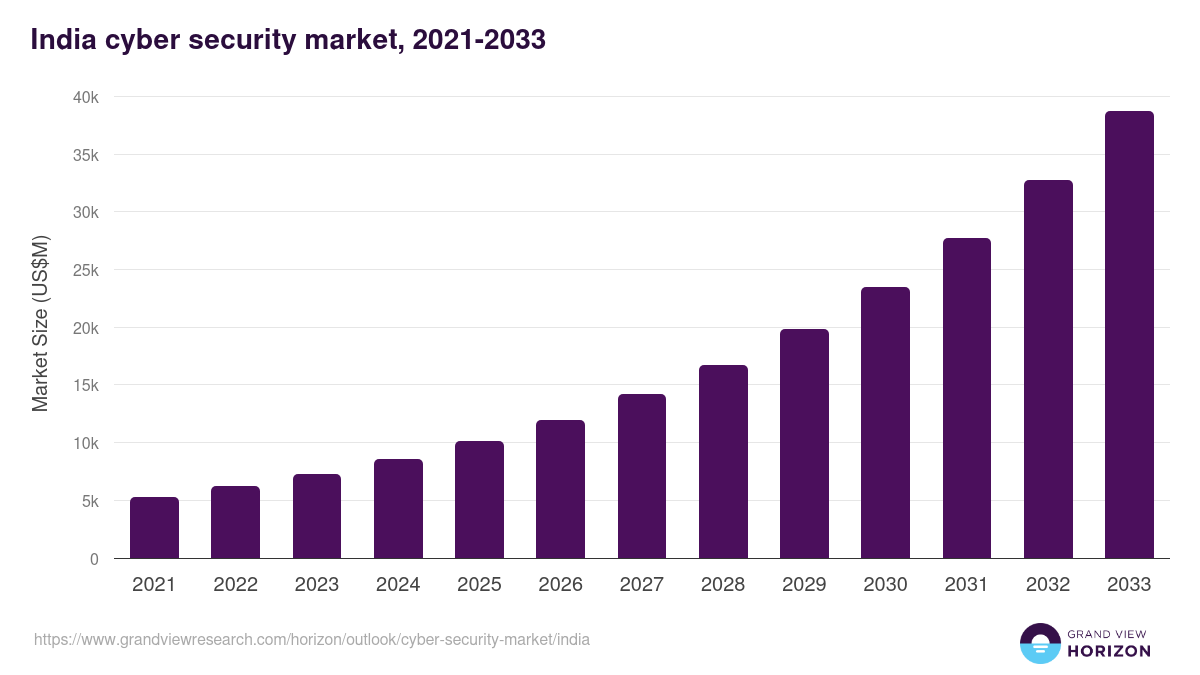
India's cybersecurity market was valued at approximately $10 billion in 2025 and is forecast to grow at a CAGR of over 18% through to 2031, on course to more than triple in size within a decade, well above the global average growth rate.
The threat environment driving that spend is severe. Cybersecurity incidents in India are rising at roughly 50% CAGR. The country accounts for approximately 14% of global cyberattacks, and state-sponsored attacks on critical infrastructure grew by ~278% between FY2022 and FY2024.
Against that backdrop, the talent shortage is acute. The global cybersecurity workforce needs to grow by 87% to meet current demand, and India's shortfall alone sits at over 1 million unfilled positions. 54% of Indian organisations point directly to a lack of trained personnel as the cause of their security failures.
Compensation reflects the imbalance. Entry-level penetration testers are starting at ₹11.8 LPA. Cybersecurity analysts at ₹6.9 LPA. Senior roles in threat intelligence, red teaming, and incident response command significantly more, and certified professionals who can actually do the work are scarce enough that salaries are moving fast
The Skills That Indian Employers Are Hiring For Right Now
Most cybersecurity courses teach theory. They cover frameworks, explain concepts, and walk you through slides. That has value, but it does not prepare you for the moment a real incident lands in your lap at 2am, or when a client asks you to evaluate their network exposure before a product launch.
Employers across India's security market are increasingly explicit about what they want: candidates who have done the work, not just read about it. Frameworks and concepts are easy to absorb. Knowing what to do when a SIEM throws 4,000 alerts during an active incident is something you develop through repetition.
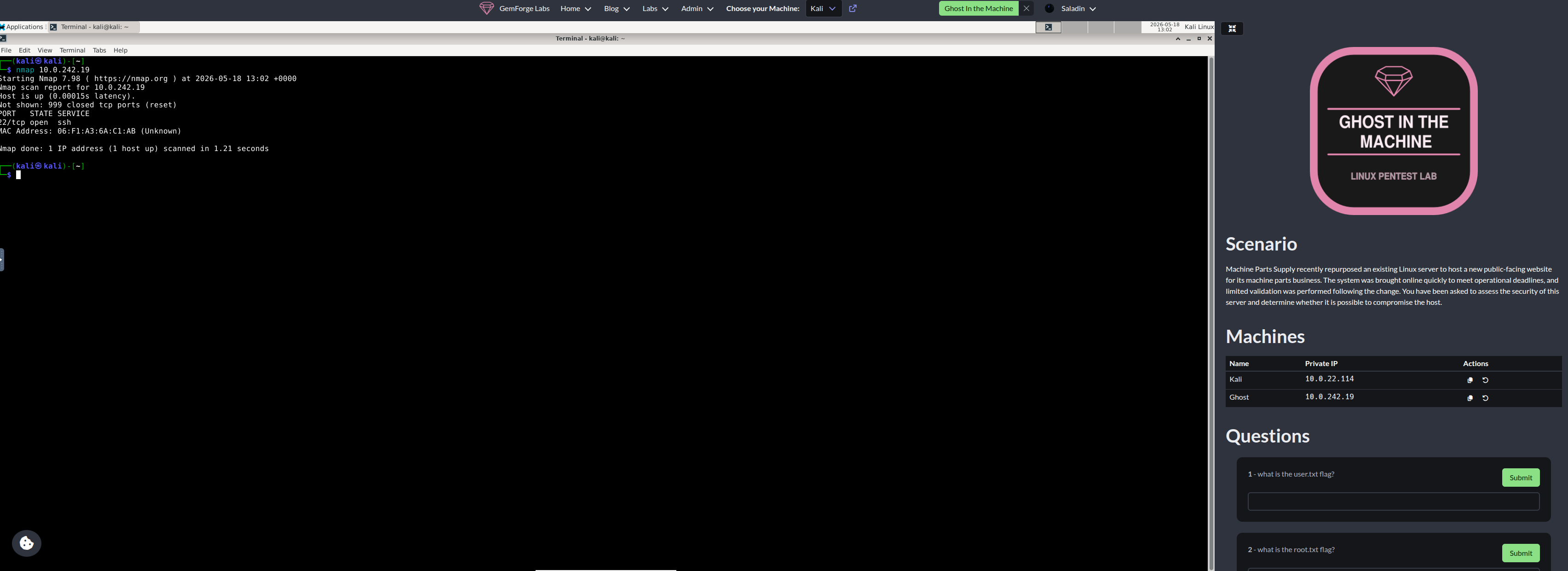
Lab-based training has become the standard for serious security development globally for that reason. When you configure actual systems, run tools against live targets, and triage real artefacts, the learning transfers differently than it does from a textbook. You encounter the failure modes, the edge cases, the tooling quirks. You build the instinct to deal with them.
GemForge Labs is built around that model.
The Skills That Indian Employers Are Hiring For Right Now
Different sectors have different priorities, and the roles being recruited for right now reflect that. Here is where the demand is concentrated:
Penetration Testing and Red Teaming Bengaluru, Hyderabad, Pune, and Delhi-NCR are the primary hiring hubs. Organisations want professionals who can simulate adversary behaviour, not just run automated scanners. OSCP, CEH, and eJPT are the certifications that open doors. Practical lab time is what makes the certification meaningful.
Security Operations (SOC Analysis) India's managed security services sector is growing at over 18% annually, driven partly by the fact that organisations cannot hire fast enough in-house. SOC analysts who understand SIEM platforms, log analysis, alert triage, and incident escalation are in constant demand. It is also one of the more accessible entry points for those building their career from scratch.
Cloud Security With cloud adoption accelerating across BFSI, healthcare, and government, cloud-specific security skills are increasingly critical. AWS and Azure security configurations, IAM, and cloud-native threat detection are among the fastest-growing sub-specialisms in the Indian market.
Threat Intelligence and Malware Analysis As state-sponsored and ransomware threats increase, organisations are investing in capabilities to understand not just that an attack happened, but how and by whom. Malware reverse engineering, binary analysis, and threat actor profiling are niche skills, but extremely well-compensated ones.
Digital Forensics & Incident Response The average cost of a data breach in India is $2.1 million. As regulatory pressure increases under the Digital Personal Data Protection Act (DPDPA), organisations need professionals who can respond, contain, and document incidents properly. DFIR skills are in short supply across the board.
What the Certification Landscape Looks Like
Certifications remain a significant part of the hiring conversation in India, particularly for candidates breaking into the field or transitioning from adjacent IT roles.
CompTIA Security+ — A strong foundational cert, globally recognised. Good for SOC and entry-level roles.
eJPT (eLearnSecurity Junior Penetration Tester) — Practical, affordable, and increasingly recognised in India. A solid first certification for aspiring pentesters.
BTL1 (Blue Team Level 1) — Focused on defensive operations. Covers SIEM, threat intelligence, digital forensics, and incident response with hands-on labs. Particularly well-suited to SOC roles.
OSCP (Offensive Security Certified Professional) — The standard for offensive security. Rigorous, practical, and globally respected. Highly valued in India's red team and pentesting market.
CEH (Certified Ethical Hacker) — Widely listed in Indian job postings. More theory-focused than OSCP and known as a bit of a meme certification amongst practicioners. (Sorry EC Council).
Build some real hands-on skills in a lab environment, then pursue a practical certification that demonstrates you can apply those skills under pressure. A certification completed through a question bank alone is becoming easier for hiring managers to spot.
The problem with the list above? Cost. OSCP runs to around $2,400 USD. Security+ sits at $392. Even BTL1, one of the more accessible options, comes in at $450, which sounds reasonable until you convert it against an Indian fresher's salary. For someone just out of college, the certification that would most help them get hired is often the one they cannot afford to sit. That is a structural problem, and it prices out a significant chunk of the talent pool before they even get started.
India's Cybersecurity Talent Has Always Been There
India produces hundreds of thousands of engineering graduates every year. The country has deep talent in software development, systems engineering, and mathematics. The foundational aptitude for cybersecurity work is not in question.
What has been missing is structured, practical, affordable pathways to convert that technical talent into job-ready security professionals. That gap is closing, but the window between a growing market and an undersupplied talent pool will not stay open indefinitely.
The regulatory environment is tightening. The DPDPA has real teeth, and CERT-In reporting requirements are pushing organisations to invest in internal capability. Digital India is expanding the attack surface and the demand for defenders at the same time. The combination of a fast-growing market, strong salary progression, and a genuine shortage of skilled professionals creates conditions that rarely persist for long.
Join the GemForge community on Discord — connect with other security professionals and learners across India and beyond, share lab writeups, get cert advice, and stay across what's happening on the platform.
Start Building on GemForge
GemForge Labs offers hands-on cybersecurity training environments built around real-world scenarios. Whether you are starting from scratch, preparing for a certification, or looking to deepen specialist skills, our lab-based approach ensures you build capability that translates directly to the workplace.
Sources: Fortinet 2025 Global Cybersecurity Skills Gap Report, Mordor Intelligence India Cybersecurity Market Report 2025, nucamp.co India Cybersecurity Job Market Report, Ken Research India Cybersecurity Readiness POV, ISC2 Cybersecurity Workforce Study 2024, National Payments Corporation of India UPI Statistics.
